
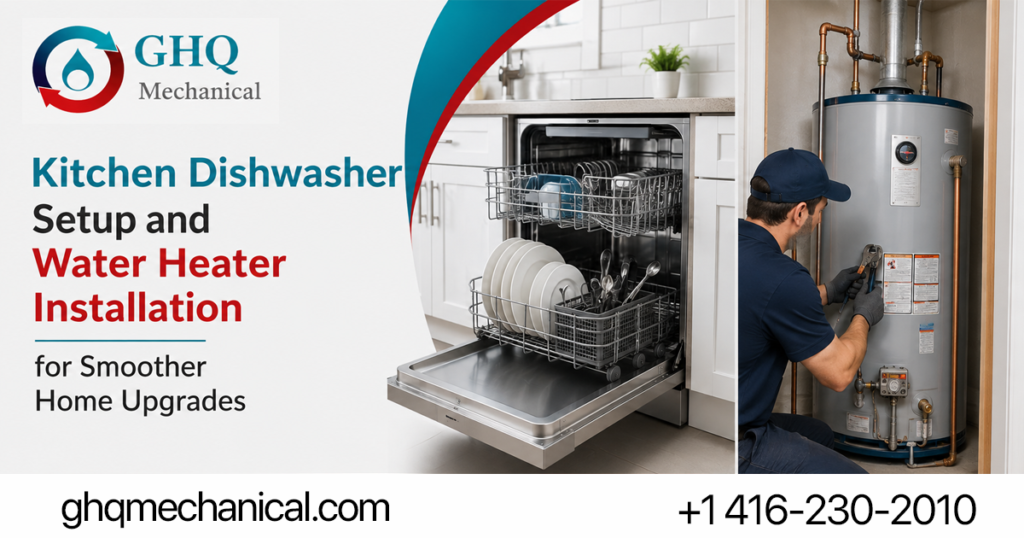
Dishwashers and water heaters have different installation steps since they serve different purposes at home. Dishwashers need water, drainage, electrical, and cabinet connections. Water heaters need the right water connections, an energy supply, safety controls, and thorough testing before use.
Why Should Each Appliance Be Installed With the Right Connections?
Each appliance needs the right connections to work safely and correctly. Dishwashers usually fit under the kitchen counter and connect to the plumbing already in place. Water heaters provide hot water for the whole home and often need more complex connections.
If connections are not done correctly, you might have leaks, poor performance, or other issues. Having a professional install your appliances helps make sure everything is set up as it should be.
What Should Be Checked Before Installation?
Make sure there is enough space for the appliance and easy access to the needed connections. Check the plumbing and electrical points before starting. This helps spot any changes needed before installing the appliance.
What Happens During a Kitchen Dishwasher Setup?
A Kitchen Dishwasher Setup generally involves positioning the unit, connecting the water supply, and securing the drain connection. The technician also checks the required electrical connection before operating the appliance. After installation, the dishwasher can be tested for proper water flow and drainage.
The surrounding cabinet area should be checked for enough clearance and suitable access. Proper positioning also helps the dishwasher sit securely during normal operation.
Why Does Dishwasher Drainage Matter?
A dishwasher must have a good drain connection to get rid of used water after each cycle. If the connection is not right, you could have drainage issues or leaks. Testing the drain after installation makes sure wastewater leaves the dishwasher properly.
What Does Water Heater Installation Usually Involve?
A water heater installation needs attention to the home’s water supply and the heater’s energy source. The technician connects the necessary water lines and checks the equipment’s required controls and safety components.
Why Are Safety Checks Important?
Water heaters involve heat, pressure, water, and an energy source. Each connection needs to be checked before the system is placed into normal use. Testing helps identify leaks, connection problems, or operating problems before they affect the household.
For water heater installation, the work area should remain accessible from the beginning. Homeowners should also state any previous problems with hot water or the existing heater.
How Can Homeowners Prepare for Either Installation?
Homeowners should clear the installation area before the technician arrives. They should also provide access to existing plumbing, electrical connections, or the water heater location. Having the appliance and installation information available can make planning easier.
For a Kitchen Dishwasher Setup, the technician needs clear access beneath the counter and nearby connections. Removing stored items from the cabinet can make inspection and installation easier.
Frequently Asked Questions
Can a dishwasher be installed where an old one was removed?
Yes, an existing dishwasher location may already have suitable plumbing and electrical connections. However, those connections should still be inspected before installing the replacement. Changes may be needed if the existing setup does not meet the appliance requirements.
How long does water heater installation take?
How long installation takes depends on the type of heater, where it goes, and the condition of your current connections. Replacing an old heater is usually quicker than a brand new install. The technician can give you a better estimate after looking at your setup.
Does a new dishwasher need to be tested after installation?
Yes, testing makes sure the dishwasher gets water and drains as it should. The technician will also check for leaks around the connections. Running the first cycle can show any problems that need fixing before you start using it regularly.
Conclusion
Dishwashers and water heaters both need careful installation, but the work differs for each appliance. A dishwasher needs a proper water connection, drainage line, electrical access, and enough room for secure placement. A water heater involves water lines, the right energy connection, safety controls, and checks before it is put into use. Getting the area ready before the technician arrives can make the installation easier. Clear the space around the appliance and make sure the required connections are accessible. Having the right setup in place gives the technician a better starting point and can help avoid delays during the installation. Taking care of these details also helps ensure the appliance is installed safely and ready for regular use.