
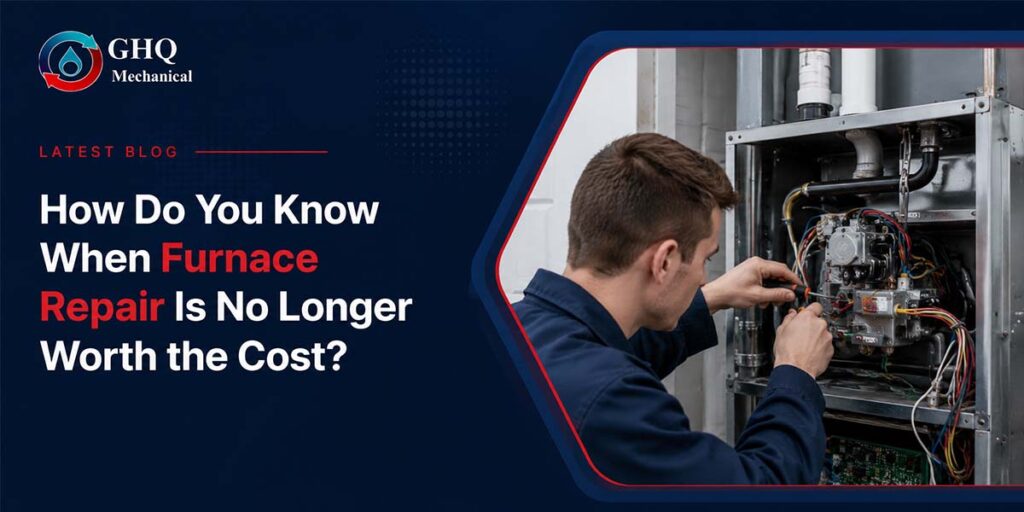
Your furnace has broken down again, but is another repair really the smartest investment? Many homeowners continue paying for repeated repairs, hoping to extend the life of an aging system. While repairs can solve minor issues, there comes a point when replacing the furnace becomes the more practical and cost-efficient choice.
If you’re searching for furnace repair near me, knowing when to repair and when to replace your heating system can help you avoid unforeseen breakdowns and rising energy bills.
How Long Should a Furnace Last?
With regular maintenance, most furnaces provide reliable heating for around 15 to 20 years. Over time, parts wear out, energy efficiency declines, and the need for repairs may increase. Although proper maintenance will help a furnace last longer, a furnace cannot last indefinitely.
If your furnace is approaching the end of its expected life, it may be worth evaluating whether another repair is the best long-term solution. Many homeowners searching for furnace repair near me discover that an aging system may no longer be the most cost-effective option.
What Are the Signs Repair May No Longer Be Worth It?
Some warning signs indicate that keeping your current heating system may cost more than investing in a new one.
- Your furnace requires regular repairs.
- Energy bills continue to increase.
- Heating is uneven throughout the home.
- Strange noises or unusual odors become common.
- Replacement parts are difficult to find.
When several of these issues occur together, furnace replacement often provides better long-term value while improving your home’s comfort and energy efficiency.
When Is It Time to Stop Repairing Your Furnace?
A repair is usually worthwhile when the problem is isolated, and the furnace is relatively new. However, if repair costs continue to add up, furnace replacement may become the more economical option.
Consider the Age of Your Furnace
Older furnaces are more likely to develop recurring mechanical problems. Investing in major repairs for a system nearing the end of its lifespan may only delay an inevitable replacement.
Compare Repair Costs
One recommendation is to consider replacement when repair costs begin to make up a large percentage of the price of a new unit. An expert assessment will help you weigh the two options based on your equipment’s condition.
What Are the Benefits of a New Furnace?
The installation of a new heating system comes with more benefits than just supplying warmth again. Modern heater models are designed to work more effectively and improve your comfort at home.
A professional New Furnace Setup guarantees the equipment is properly sized and installed, helping the system perform efficiently from day one while decreasing the risk of future problems.
Why Professional Installation Matters
The most efficient furnace cannot work correctly when installed incorrectly. The size of the furnace, the adjustment of its airflow, and safety issues all contribute to the furnace’s proper operation.
A professional New Furnace Setup helps ensure your heating system is installed correctly and meets local codes and manufacturer recommendations, decreasing the risk of future performance issues.
Conclusion
Replacing a furnace is a big move, but maintaining one that needs constant repairs will prove even more costly in the long run. Noticing these symptoms early helps make an informed decision before everything fails completely. If you have questions about whether to repair or replace, getting an expert assessment may be useful.
Frequently Asked Questions
When should I replace my furnace rather than repair it?
If your heating system is older than 15 years, constantly needs repairs, or needs costly repairs, then replacing it may make more sense. An expert assessment can help determine the best course of action.
How long does a furnace usually last?
The typical lifespan of a furnace ranges from 15 to 20 years, depending on how well it has been serviced.
Is a new furnace more energy efficient?
Yes, modern furnaces are generally more energy efficient than older models. They can provide more steady heating while helping reduce monthly energy costs.